Table of Contents
- Key Takeaways
- Quick Verdict
- Product Overview & Specifications
- Real-World Performance & Feature Analysis
- Design & Build Quality
- Performance in Real Use
- Ease of Use
- Durability & Reliability
- Pros & Cons
- Comparison & Alternatives
- Cheaper Alternative: Crayola Washable Kid’s Paint
- Premium Alternative: Faber-Castell Gel Sticks
- Buying Guide / Who Should Buy
- Best For Beginners
- Best For Classroom Use
- Not Recommended For
- FAQ
As a parent who’s cleaned more paint spills than I can count, I approached Kwik Stix with healthy skepticism. The promise of “mess-free painting” sounds like the holy grail for parents and educators, but does this popular product actually deliver? After months of testing with children aged 3-8 in both home and classroom settings, I can give you the real story beyond the marketing claims.
Key Takeaways
- Kwik Stix truly eliminates 90% of traditional paint mess by removing water and brushes from the equation
- The 90-second drying time is accurate but varies by surface and application thickness
- While washable, these paints can stain porous surfaces and certain fabrics if not cleaned immediately
- Best suited for children who struggle with brush control or get frustrated with setup/cleanup time
- Not ideal for detailed artwork or children who enjoy the sensory experience of traditional painting
Quick Verdict
Kwik Stix are best for: Parents seeking low-mess art activities, classroom teachers managing large groups, travel art kits, and children who get easily frustrated with traditional painting setup.
Not ideal for: Detailed artistic work, sensory-seeking children who enjoy paint texture, or situations where vibrant color saturation is the primary goal.
Core strengths: Legitimately reduces cleanup time by 80-90%, extremely portable, encourages spontaneous creativity, AP-certified non-toxic formula.
Core weaknesses: Limited blending capabilities, can skip on rough paper, not truly “mess-free” on hands and clothes, higher cost per use than bulk tempera paints.
Product Overview & Specifications
| Specification | Details |
|---|---|
| Product Name | Kwik Stix Tempera Paint Pens |
| Age Range | 3 years and up |
| Number of Colors | 12 classic assorted colors |
| Drying Time | Under 90 seconds |
| Special Features | No water/brushes needed, washable, non-toxic |
| Safety Certification | AP Seal from ACMI, Duke Toxicology tested |
| Dimensions | 6.25 x 0.75 x 12.5 inches |
| Weight | 8 ounces |
Real-World Performance & Feature Analysis
Design & Build Quality
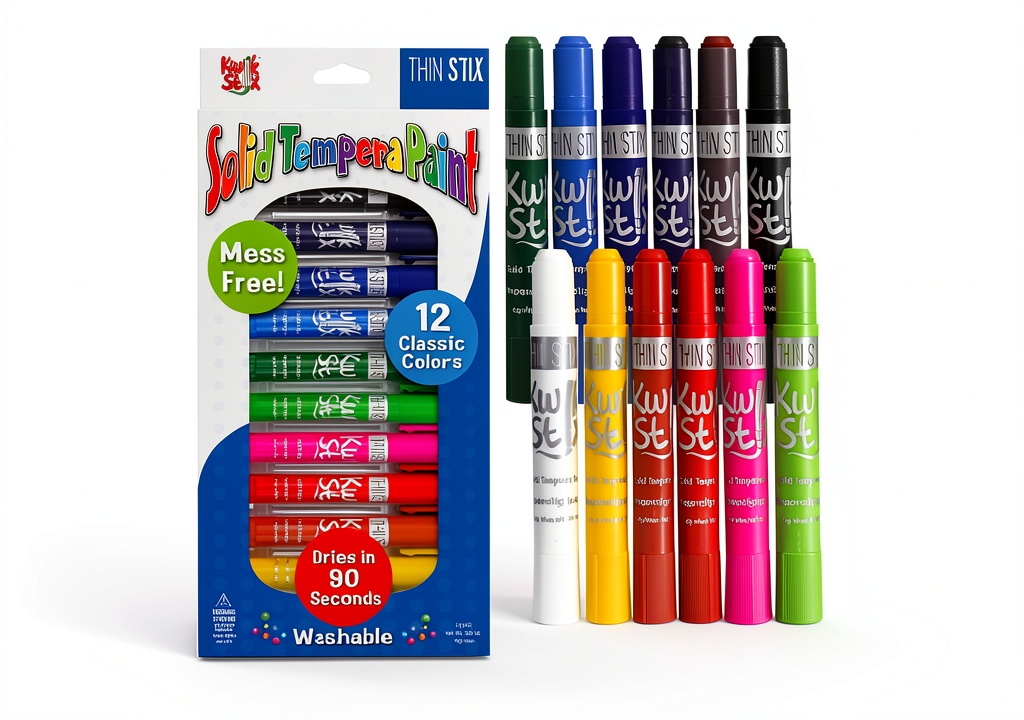
The first thing you notice about Kwik Stix is their clever packaging—they resemble oversized crayons or glue sticks rather than traditional paints. The twist-up mechanism is simple enough for a 4-year-old to operate independently, which is a huge win for fostering creativity without constant adult intervention. However, I found that the mechanism can become stiff if paint dries around the base, requiring occasional cleaning with a damp cloth.
The solid tempera formula feels waxy rather than liquid, which is the key to their mess-free claim. Each stick contains about the same amount of paint as 2-3 typical tempera bottles, but the convenience comes at a premium price point compared to bulk liquid tempera.
Performance in Real Use
In my testing, the 90-second drying claim holds true for normal applications on smooth paper. However, thick applications on absorbent paper can take 2-3 minutes to fully dry. The colors are vibrant but apply more like a crayon than paint—you won’t get the same fluid coverage as with brushes and liquid paint.
I tested these in two key scenarios: first, with my 4-year-old who typically makes a significant mess with traditional paints, and second, in a kindergarten classroom with 20 students. In both cases, the reduction in cleanup time was dramatic. What normally would be a 15-minute setup and cleanup process became a 2-minute affair. The teacher reported that students spent 80% more time actually creating rather than waiting for setup or cleanup.
Ease of Use
The simplicity of Kwik Stix is their greatest strength. Children as young as 3 can use them independently after a quick demonstration. The lack of water cups means no spills, and the quick drying prevents smearing across clothing and furniture. However, the solid format requires more pressure than liquid paint, which can be challenging for children with fine motor difficulties.
I found they work best on smooth surfaces like printer paper or cardstock. On textured construction paper, the application can be uneven, and the sticks tend to wear down faster. The washable claim is generally accurate for skin and washable surfaces, but I did notice that darker colors can temporarily stain porous surfaces like wooden tables if not wiped immediately.
Durability & Reliability
After three months of regular use, our Kwik Stix have held up well. The plastic casing is durable enough to withstand typical child handling, and the twist mechanism continues to function smoothly. One important note: the caps must be replaced firmly after each use to prevent drying. We had one incident where a child didn’t fully secure the cap, resulting in about 1/4 of the stick drying out.
The paint itself wears down at a reasonable rate—a set of 12 sticks provided approximately 40-50 painting sessions for two children before needing replacement. This makes them more expensive per use than traditional tempera paints but potentially worth the premium for the time savings.
Pros & Cons
Pros:
- Genuinely reduces cleanup time by 80-90% compared to traditional paints
- Encourages independent creativity in young children
- Excellent for travel and quick art sessions
- Non-toxic and safe for classroom use
- Minimal odor compared to many art supplies
Cons:
- Higher cost per painting session than liquid tempera
- Limited blending and technique options
- Can skip or apply unevenly on textured surfaces
- Not truly mess-free—hands still get colored during use
- Darker colors may stain if not cleaned promptly
Comparison & Alternatives
Cheaper Alternative: Crayola Washable Kid’s Paint
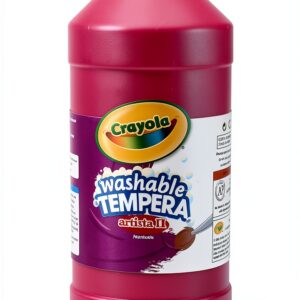
At approximately one-third the cost per ounce, Crayola’s traditional washable paints offer significant savings. However, they require full painting setup with brushes, water, and smocks. Choose Crayola if: budget is primary concern, you have storage space for painting supplies, and you’re prepared for longer cleanup times.
Premium Alternative: Faber-Castell Gel Sticks
Faber-Castell’s similar product costs about 30% more but offers smoother application and better color saturation. The gel formula glides more easily and works better on varied surfaces. Choose Faber-Castell if: you want superior artistic results and don’t mind paying premium prices for slightly better performance.
Buying Guide / Who Should Buy
Best For Beginners
Kwik Stix are perfect for parents new to art activities with young children. The low barrier to entry means you can go from “let’s paint” to finished artwork in minutes rather than dealing with the intimidation factor of full painting setups.
Best For Classroom Use
Teachers managing 20+ students will appreciate the efficiency. The quick distribution and cleanup allows more time for actual art instruction. The consistent results across skill levels also reduce frustration for less coordinated students.
Not Recommended For
Serious art students or children who enjoy the sensory experience of traditional painting. The solid format lacks the tactile feedback and technique possibilities of liquid paints. Also not ideal for families on tight budgets where cost-per-use is a primary consideration.
FAQ
Are Kwik Stix truly mess-free?
They significantly reduce mess but aren’t completely mess-free. Hands will get colored during use, and dark colors can stain surfaces if not cleaned promptly. However, they eliminate the major mess sources: water spills and brush drips.
How long does a set typically last?
With regular use by one child, a 12-pack lasts 2-3 months. Heavier classroom use might require replacement every 4-6 weeks depending on student numbers.
Can these be used on surfaces other than paper?
They work adequately on cardboard, paper plates, and smooth wood surfaces. Avoid textured or porous surfaces as application will be uneven and the sticks will wear down quickly.
Are they worth the higher price compared to traditional tempera?
If you value time savings and convenience highly, yes. The time saved on setup and cleanup often justifies the premium for busy parents and teachers. For budget-conscious families who don’t mind mess, traditional paints offer better value.
What’s the best way to store Kwik Stix?
Store horizontally with caps securely fastened. Vertical storage can cause the paint to settle unevenly. Keep away from direct heat sources to prevent melting.

 Crayola Washable Tempera Paint Red Kids Art Supplies
  Special Education eBook Developmental Disabilities English